
🍫 The Ancient Origins of Chocolate
The story of chocolate begins with the humble but divine Cacao tree. Archaeological evidence suggests cacao was first domesticated more than 5,000 years ago in what is now the Amazon region, before spreading to Mesoamerica. Wikipedia
For the peoples of ancient Mesoamerica — notably the Maya and the Aztecs — cacao was far more than a treat: it was a sacred “gift from the gods.” Cacao beans were used as currency, offered in ceremonies, and consumed in the form of bitter, spiced drinks.
It would take centuries — and a trans-Atlantic odyssey — for cacao to become the sweet, creamy chocolate bars we know today. Europeans, introduced to cacao by Spanish explorers in the 16th century, first consumed it as a beverage before refining it into solid “chocolate” by the 19th century.
Thus, chocolate carries a deep legacy: from spiritual drink to worldwide comfort-food.
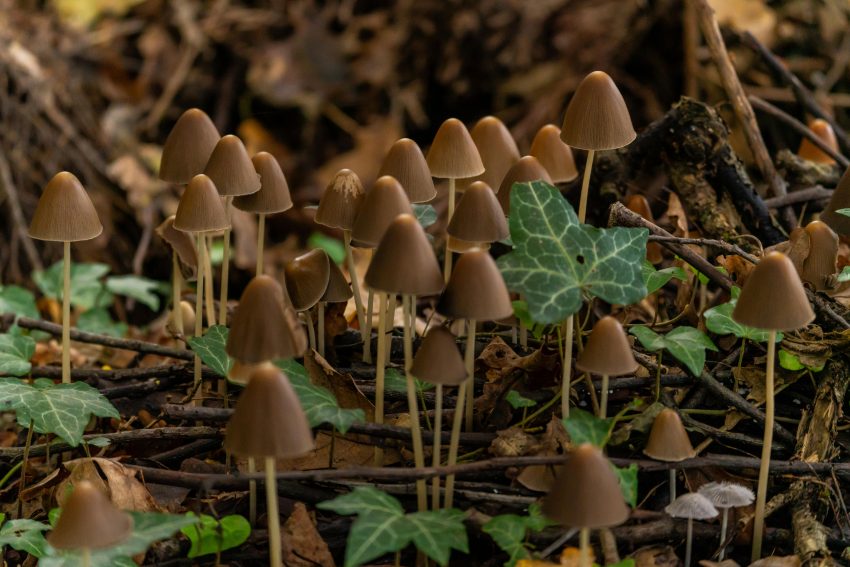
🍄 When Mushrooms Met Cacao: The Birth of Mushroom Chocolate
The pairing of cacao and mushrooms is more than a modern novelty — it has roots in ancient spiritual practice. Indigenous Mesoamerican cultures sometimes consumed psychoactive mushrooms, known in Nahuatl as Teonanácatl — “flesh of the gods.”
Historical records suggest that mushrooms and cacao were sometimes used together in rituals: a mushroom-cacao beverage intended to deepen the spiritual journey — cacao “unlocking the heart,” mushrooms “unlocking the mind.” This ancient “Aztec combo” speaks to a long-standing relationship between psychoactive fungi and the sacred bean.
Fast forward to modern times: as interest in psychedelics resurged in the mid-20th century, creative enthusiasts began blending mushrooms with chocolate to create more palatable and accessible “edibles.”
Today, “mushroom chocolates” come in many forms — from home-crafted bars to commercially produced ones — offering a bridge between ancient ritual and contemporary consumption.
🌿 The Long, Varied History of Cannabis
Meanwhile, the story of Cannabis runs on a parallel—and equally ancient—timeline. Genetic and archaeological evidence suggests that cannabis was first domesticated around 12,000 years ago in Central Asia. PubMed
Human cultures quickly found many uses for it: as fiber (for rope, cloth, paper), food, and medicine. The earliest recorded medical use of cannabis appears in ancient China — around 2700 BC — where it was employed for treating various ailments.
Cannabis use spread through trade and migration across Asia, Africa, the Middle East, and eventually Europe and the Americas. Over millennia, it served both pragmatic purposes (fiber, nutrition) and psychoactive / medicinal roles (relaxation, relief, ritual).
In more recent history, especially in the 19th and early 20th centuries, cannabis extracts were sold in pharmacies and used as medicine in the West. But by the mid-20th century, many governments imposed strict restrictions on cannabis — a prohibition that lasted decades before a renewed wave of legalization and destigmatization began.
🍬 Introducing TRĒ House Mushroom Milk Chocolate Bar (50 g)
 Against this rich tapestry of ancient traditions and evolving cultures, products like the TRĒ House Mushroom Milk Chocolate Bar stand at a curious crossroads — part nostalgic homage, part modern reinterpretation.
According to the manufacturer, TRĒ House does not use classic psychedelic mushrooms containing psilocybin, psilocin, or other restricted compounds. Instead, their “magic mushroom” bar relies on a proprietary blend (called Neurotonin™) of mushrooms often associated with wellness and cognitive support (such as lion’s mane, turkey tail, cordyceps, and chaga), along with nootropics and adaptogens.
In effect, TRĒ House recreates the symbolic union of cacao and mushrooms — but frames it not as a psychoactive product, but a wellness-oriented edible. The result: a chocolate bar that nods to ancestral practices, but fits within modern regulatory and consumer norms.
That makes this 50 g bar particularly interesting for your audience at cannabispromoter.com. It exemplifies how ancient botanical traditions (cacao, mushrooms, cannabis) continue — morphing into new forms, new purposes, new narratives.
Buy Now
🔮 Why This History Matters for Today’s Cannabis & Psychedelic Culture
-
Continuity of sacred plants: Cacao, mushrooms, and cannabis have all served as “plants of the gods” — for ceremony, medicine, pleasure. Their stories are deeply rooted in human culture and spirituality.
-
Adaptation & integration: As societies, laws, and tastes changed, these plants were adapted — cacao turned into indulgent chocolate, mushrooms into smokable or edible psychedelics, cannabis into fiber, food, and medicine. Modern products like TRĒ House’s bar show how adaptation continues.
-
Changing perception: What was once sacred — ritualistic — is now commercial (wellness, recreation, lifestyle). That evolution reflects broader shifts in societal attitudes toward plant-based psychoactives and natural products.
-
Blending traditions: The old “Aztec combo” of cacao + mushrooms finds echoes today in mushroom chocolates, and more broadly, in the growing acceptance of cannabis and psychedelic—or pseudo-psychedelic — products.
⚠️ A Note on Legal Status, Safety & Transparency
It’s important to acknowledge that honest and transparent labeling matters. The modern psychedelic-cacao products — including those by TRĒ House — often bypass legal and safety concerns by using non-psychoactive mushroom blends.
But mixing psychoactive mushrooms (or cannabis) with chocolate — especially illicit or unregulated — is a practice fraught with risk: uncertain dosing, mislabeling, accidental ingestion by non-users (children, pets), and potential legal consequences.
For readers of cannabispromoter.com, understanding the ancient roots of these plants, and the modern realities of their use, can nurture a more informed — and responsible — conversation around consumption, culture, and legal/personal safety.
✨ Conclusion: From Divine Gift to Consumer Choice
The journey of cacao, mushrooms, and cannabis from sacred plants to modern consumables is nothing short of extraordinary. From ancient Mesoamerican altars and nomadic Eurasian steppes to contemporary wellness shelves and boutique chocolate bars, these plants have followed humanity’s quest for connection, healing, transcendence — and pleasure.
The TRĒ House Mushroom Milk Chocolate Bar (50 g) may not be a “psychedelic trip” in the classical sense — but it is a symbolic nod to millennia of human experimentation, adaptation, and reverence for nature.